Unlocking Visual Potential with 3D Rendering Medical Backgrounds
The intersection of advanced visualization technology and healthcare communication has created a new standard for how medical information is presented. At the heart of this transformation lies the 3d rendering medical background. These digital assets are no longer just decorative elements; they serve as critical tools for conveying complex scientific concepts, enhancing patient education, and elevating brand identity within the pharmaceutical industry. Whether you are a graphic designer seeking high-quality textures or a researcher needing precise visual aids, understanding the depth and versatility of these renders is essential.
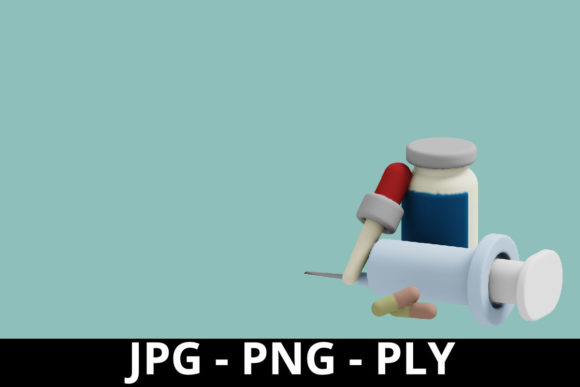
A modern 3d rendering medical background captures the essence of cleanliness, precision, and innovation. Unlike traditional photography, which can be limited by lighting constraints or physical props, 3D rendering allows for the creation of impossible scenarios that still feel hyper-realistic. From sterile laboratory environments to floating pills suspended in void space, these images provide a blank canvas that can be adapted for various media formats. The inclusion of specific objects like pills, syringes, and tubes within these compositions adds immediate context, signaling themes of therapy, cure, and science without the need for text.
The Anatomy of a High-Fidelity Medical Render
To appreciate the value of a 3d rendering medical background, one must understand the technical components that make up these images. A typical package designed for professional use often includes multiple file formats such as JPG and PNG for immediate web and print deployment, alongside PLY files for those who wish to manipulate the geometry themselves. This multi-format approach ensures compatibility across different software ecosystems, from Adobe Creative Cloud to Blender and Maya.
The visual language of these renders relies heavily on the concept of the clean aesthetic. In the medical field, sterility is paramount. A well-executed render eliminates visual noise, focusing the viewer's attention on the subject matter—be it a capsule, a bottle, or a needle. The lighting is typically soft and diffuse, mimicking the clinical environment of a hospital or pharmacy while avoiding harsh shadows that might suggest danger or dirt. This creates an atmosphere of health care and safety.
Key elements often found in these compositions include:
- Pharmaceutical Objects: Detailed models of drug containers, prescription bottles, and various forms of medication like supplements and vitamins.
- Medical Instruments: Realistic depictions of injection syringes, needles, and laboratory glassware used in chemical analysis.
- Environmental Context: Backgrounds that simulate laboratory surfaces, hospital corridors, or abstract representations of cellular structures.
- Abstract Concepts: Visual metaphors for illness, treatment, and the healing process, often represented through color gradients and fluid dynamics.
Practical Applications Across Industries
The utility of a 3d rendering medical background extends far beyond simple wallpaper presentation. While the ZIP folder containing these assets may be marketed for aesthetic purposes, their primary function is communicative. Professionals in diverse fields utilize these resources to bridge the gap between complex data and public understanding.
Digital Marketing and Branding
In the competitive landscape of the pharmacy and medication sectors, standing out is crucial. Companies use custom 3d renders to create unique branding materials. Instead of using generic stock photos, pharmaceutical companies commission or purchase high-end rendering assets that align perfectly with their product packaging. A pill shown in isolation against a blank, clean background suggests purity and focus, reinforcing the idea of a targeted dose for effective treatment.
These visuals are versatile enough to serve as backgrounds for social media campaigns, website headers, and digital advertisements. The ability to render a chemical reaction or a vitamin molecule in motion adds a dynamic quality that static photography cannot match. For a business owner looking to promote a new line of healthy supplements, a 3d rendering medical background provides the necessary credibility and modern appeal.
Educational Resources and Research
Educators and researchers face the challenge of explaining intricate biological processes to students and peers. A 3d rendering medical background can act as a stage for these explanations. Imagine a lecture on the mechanism of action for a specific drug; overlaying a 3D model of the drug interacting with a cell structure against a clean, rendered backdrop makes the concept tangible.
The inclusion of object files (like PLY) allows educators to import these assets into virtual reality simulations or interactive presentations. Students can rotate a syringe or examine the layers of a capsule from every angle, fostering a deeper understanding of medical science. This interactive approach transforms passive learning into an engaging experience, making complex topics like therapy and health care protocols more accessible.
UI/UX Design and App Development
With the rise of telemedicine and health tracking applications, the demand for intuitive and trustworthy interfaces has surged. Developers require high-resolution graphics that convey reliability. A 3d rendering medical background featuring subtle cues of a laboratory or a hospital setting can subtly reinforce the app's purpose without overwhelming the user interface. The clean design principles inherent in these renders ensure that the focus remains on the data being presented, whether it is a patient's dose schedule or a doctor's diagnosis.
Technical Advantages Over Traditional Photography
Why choose a 3d rendering medical background over a photograph? The answer lies in control and flexibility. When photographing physical props like pill bottles or needles, photographers are constrained by lighting conditions, lens distortion, and the availability of specific products. If a client needs a blue bottle but only has a green one, the photo shoot must be rescheduled.
In contrast, 3D rendering offers infinite customization. A designer can adjust the material properties of a tube to look like frosted glass or opaque plastic instantly. They can change the lighting to simulate a morning sunbeam or a sterile fluorescent lamp. This level of control is vital for maintaining brand consistency across global campaigns. Furthermore, 3D assets eliminate the risk of legal issues regarding the likeness of real-world products or the need for model releases for human subjects, which are sometimes required in medical photography.
The resolution capabilities of 3D rendering also surpass traditional methods. Because the image is generated mathematically rather than captured by a sensor, it can be scaled to any size without losing quality. This is particularly important for large-format prints, such as banners displayed at medical conferences or posters in waiting rooms. The render remains crisp and sharp, ensuring that the message of cure and care is delivered clearly regardless of the viewing distance.
Integrating Assets into Creative Workflows
For creators, hobbyists, and professionals alike, integrating these assets requires a strategic approach. A typical workflow begins with selecting the appropriate format from the available ZIP folder. If the project involves web design, JPG or PNG files are ideal due to their compatibility and smaller file sizes. For projects requiring transparency, the PNG format is indispensable, allowing the background to blend seamlessly with other design elements.
Advanced users may prefer the PLY files, which contain the mesh data of the 3D scene. These files can be imported into 3D modeling software to extract specific objects, such as a single capsule or a needle, and place them into a completely new environment. This modularity allows for the creation of composite images that tell a story. For example, a creator might combine a 3d rendering medical background with a custom illustration of a patient to produce a cover for a health magazine.
When working with these assets, it is important to consider the color palette. Medical imagery often utilizes cool tones like blues, whites, and greens to evoke feelings of trust and hygiene. However, there is room for creativity. A warm, golden light can be used to depict the warmth of human care, while stark white and silver can emphasize the technological aspect of science and research. The key is to ensure that the chosen colors support the intended message of the content.
Future Trends in Medical Visualization
The landscape of medical visualization is evolving rapidly. As technology advances, the line between reality and simulation continues to blur. We are seeing a shift towards photorealism where the distinction between a 3d render and a photograph becomes nearly indistinguishable. This trend is driven by the need for hyper-realistic training simulations for surgeons and medical students, where the stakes are incredibly high.
Additionally, the integration of augmented reality (AR) and virtual reality (VR) is expanding the potential of 3d rendering medical background assets. Future applications may allow patients to visualize their own treatment plans in 3D space, using renders of their specific medications and procedures. The object models included in current asset packs will likely become the building blocks for these immersive experiences.
As we move forward, the emphasis on health and wellness will continue to drive the demand for high-quality visual content. Consumers are becoming more educated about their health, seeking transparent and clear information about medication and treatment. A 3d rendering medical background serves as a perfect medium to deliver this information in a way that is both aesthetically pleasing and scientifically accurate.
Conclusion
The 3d rendering medical background represents a convergence of art, technology, and science. It is a versatile tool that empowers professionals to communicate complex ideas with clarity and impact. From the smallest detail of a pill to the grand scope of a laboratory environment, these assets provide the foundation for compelling visual storytelling. By leveraging the power of rendering, creators can transcend the limitations of the physical world to craft images that inspire confidence, educate the masses, and advance the cause of health care. Whether for a commercial campaign, an educational module, or a personal project, the availability of high-fidelity 3D assets ensures that the future of medical communication is bright, clean, and innovative.